Skip to product information
1 of 10

Palibin - Lilac Tree

Palibin - Lilac Tree

Regular price $199.95 USD
Regular price Sale price $199.95 USD
Sale Sold out
Shipping calculated at checkout.

🌿 FREE Shipping on all trees — always.

The lilac tree stands as a regal sentinel of spring's arrival, its delicate purple flowers dancing in the gentle breeze. This captivating beauty draws the eye and soothes the soul with its enchanting display. As the season unfolds, the lilac's slender branches become laden with clusters of tiny blossoms, each one a perfect masterpiece of nature's artistry. The soft hues of lavender and periwinkle intertwine to create a breathtaking tapestry that drapes gracefully across the tree's elegant frame. The air becomes suffused with the lilac's sweet, intoxicating fragrance, a delightful perfume that wafts through the garden and beckons all to pause and savor the moment. This exquisite flowering tree is a treasure to cherish, a living work of art that uplifts the spirit and reminds us of the enduring beauty that graces our world.

*Does not ship to AZ
View full details

See How Your Tree Arrives

Packed with care. Ready to thrive.

Every My Patio Tree order is carefully packaged to protect your tree during shipping — arriving healthy, upright, and ready to plant.

Watch garden educators from Spoken Garden unbox and plant four of our tree-form shrubs, including tips on container selection, staking, and first watering.

Why You'll Love It

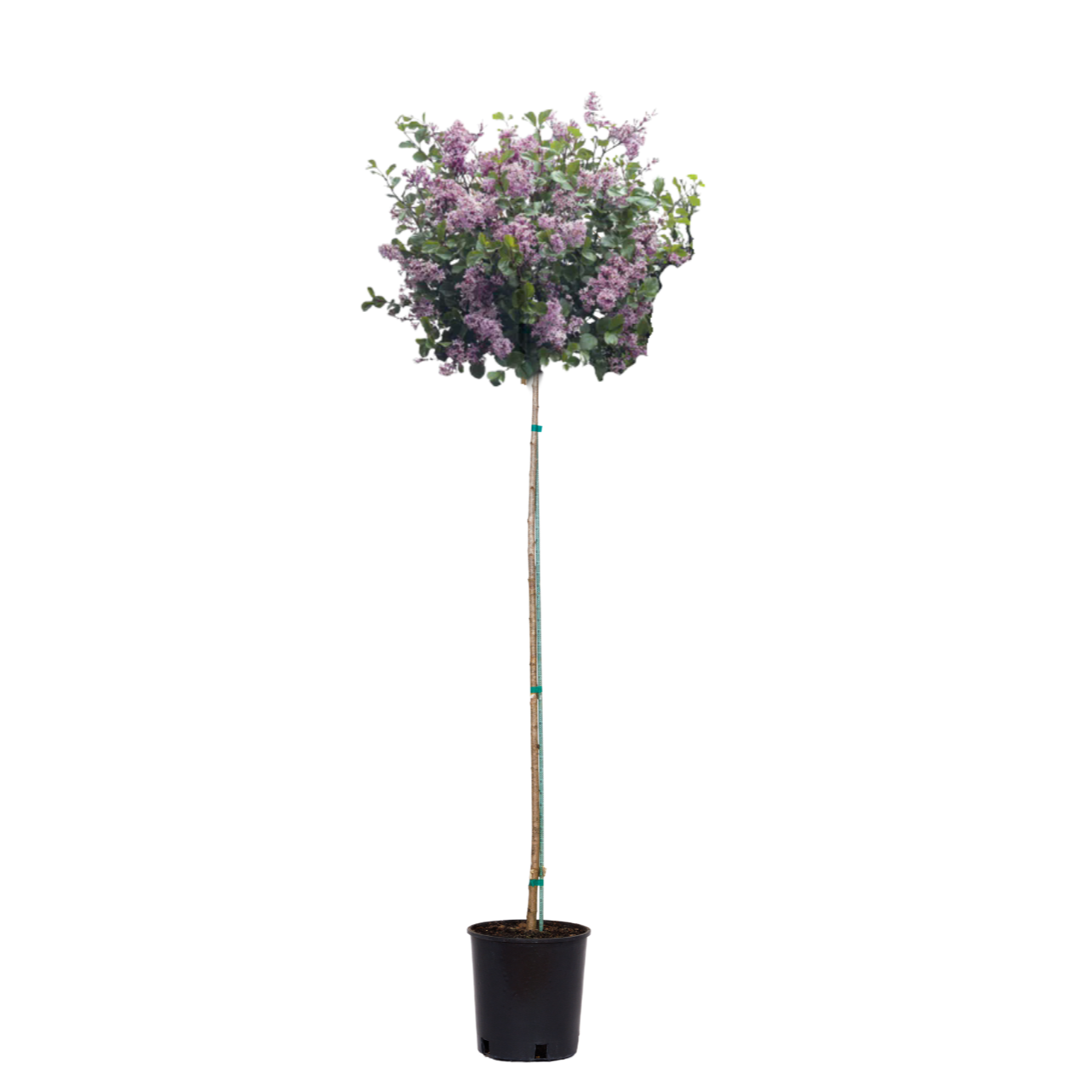
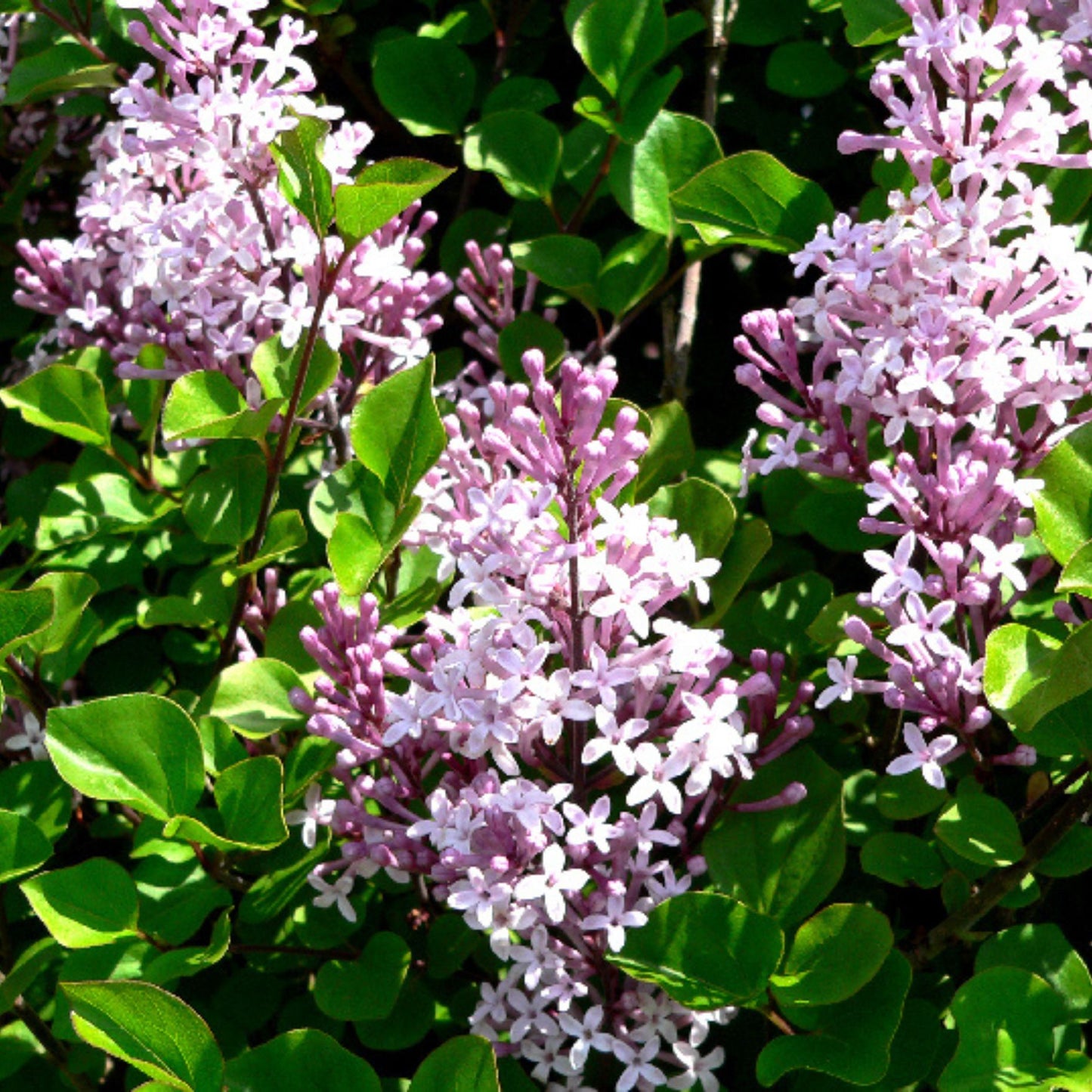
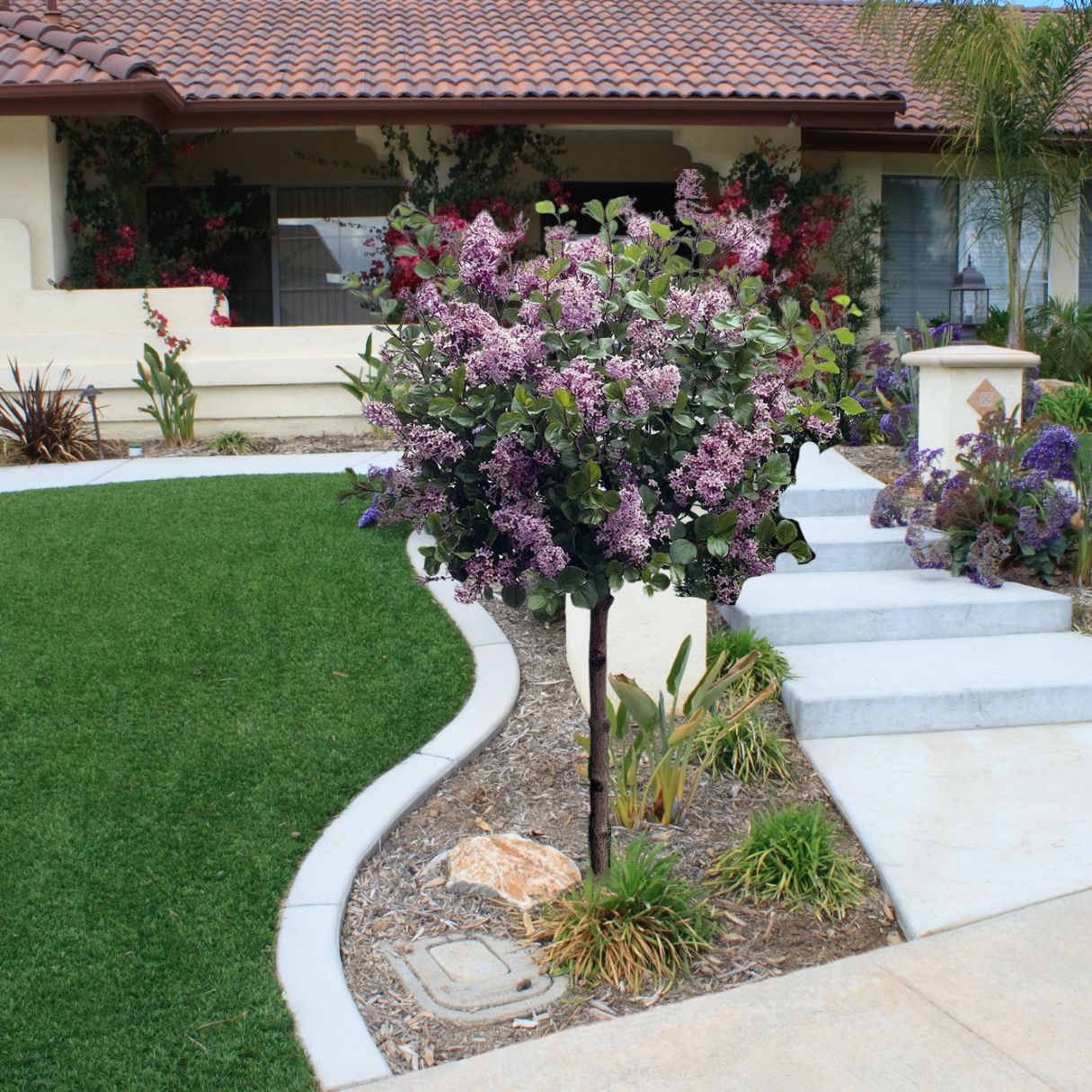
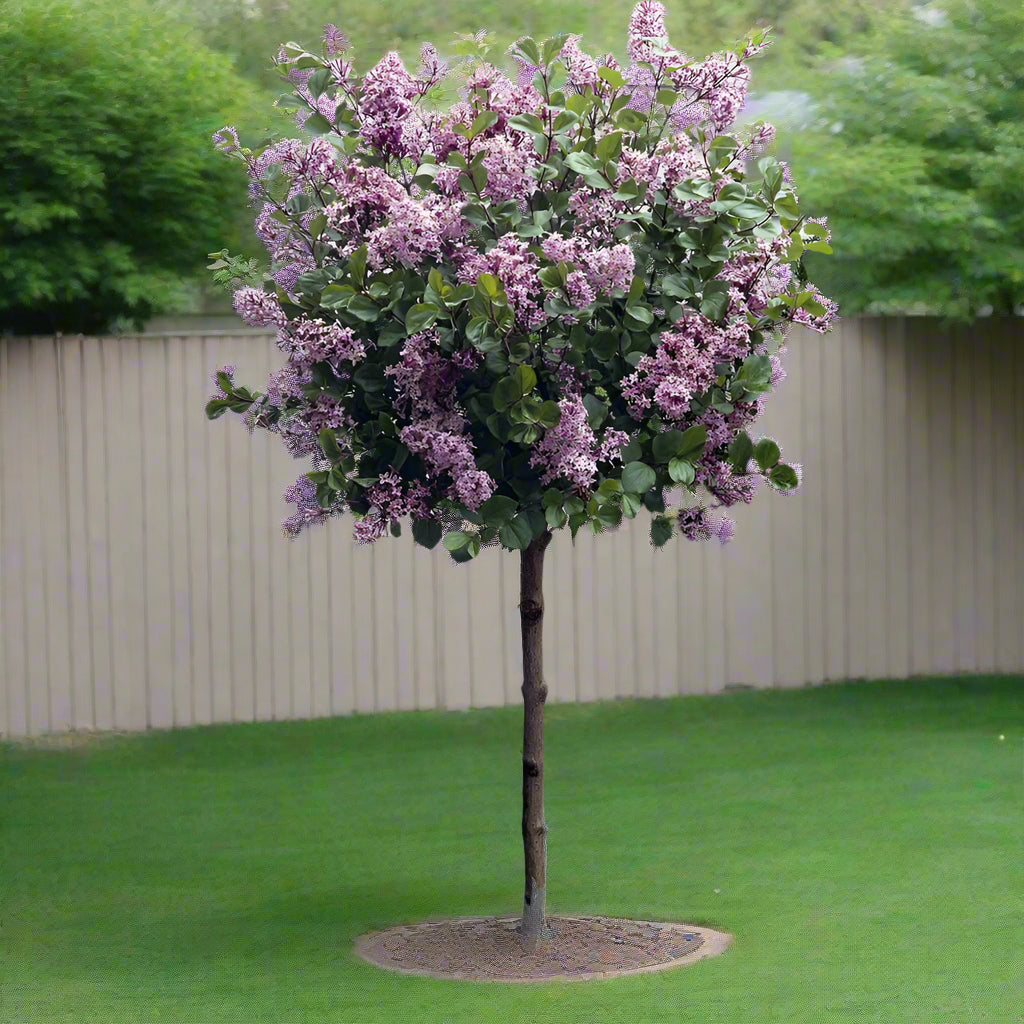
Palibin is the classic dwarf lilac — a slow-growing, densely rounded Meyer lilac that has been a garden staple for generations. In tree form, its naturally compact, rounded canopy becomes a perfectly proportioned flowering standard, covered in pale lilac to violet-purple blooms with that unmistakable lilac fragrance every spring. It is an excellent choice for formal gardens, small patios, and anyone who wants a lilac that stays manageable.

What Makes It Special

  • Classic lilac fragrance in a compact, slow-growing form
  • Dense rounded habit ideal for small spaces and formal gardens
  • One of the most widely grown and reliable dwarf lilac cultivars

Plant Information

Botanical Name Syringa meyeri 'Palibin'
Hardiness Zones Zones 3–7
Light Full sun for strongest bloom
Mature Size Compact rounded canopy; shrub reference approximately 4–5 ft tall
Growth Rate Slow
Bloom Season Spring
Flower Color Pale lilac to violet-purple
Fragrance Fragrant
Foliage Small, neat green leaves

Care Instructions

Planting & Watering
Planting

Plant in full sun — lilacs need at least 6 hours of direct sun daily for the best bloom. Choose well-drained soil; lilacs do not tolerate wet or poorly drained sites. Dig a hole twice as wide as the root ball and at the same depth. Backfill, water thoroughly, and apply a 2–3 inch layer of mulch, keeping it a few inches away from the trunk.

Watering

Water regularly during the first growing season to establish a strong root system. Once established, lilacs are relatively drought tolerant. Water deeply during prolonged dry periods, but avoid keeping the root zone constantly moist.

Pruning & Fertilizing
Pruning

Prune immediately after flowering — this is critical. Lilacs bloom on old wood (growth from the previous year), so any pruning done in late summer, fall, or winter will remove next year's flower buds. Prune right after the flowers fade in spring to shape the canopy. Remove any shoots from below the graft.

Fertilizing

Lilacs are light feeders. An annual application of compost or a balanced fertilizer in spring is typically sufficient. Avoid high-nitrogen fertilizers, which promote leafy growth at the expense of flowers.

Winter Protection

Hardy to Zone 3. Lilacs are very cold hardy and require no special winter protection in most climates. Remove any winter-damaged wood in early spring.

Good to Know

The most common reason lilacs fail to bloom is incorrect pruning timing. Always prune immediately after flowering — never in fall or winter. Palibin's slow growth rate means it rarely needs heavy pruning; a light shaping after bloom is usually all that is required.

Growing Zone Map

USDA Hardiness Zone map showing compatible growing regions for Palibin - Lilac Tree — Zones 3–7

Palibin is cold hardy to Zone 3 and performs well through Zone 7, making it one of the most cold-hardy patio trees available. Its compact size and exceptional cold hardiness make it a top choice for northern gardeners.

Frequently Asked Questions

Is Palibin fragrant?
Yes — Palibin has the classic sweet lilac fragrance, and because the blooms are held at eye level in tree form, the scent is especially enjoyable on the patio.
How big does Palibin get?
The underlying Palibin cultivar is a dwarf Korean lilac that stays approximately 4–5 ft tall as a shrub. In tree form, the overall height (trunk plus canopy) typically reaches 5–7 ft, with a compact, rounded canopy.
When does Palibin bloom?
Palibin blooms in late spring, typically May to early June — slightly later than common lilacs. The bloom period lasts 2–3 weeks.
Does Palibin rebloom?
No — Palibin is a single-season bloomer. For reblooming lilac performance, consider Bloomerang® Dark Purple instead.
Is Palibin resistant to powdery mildew?
Yes — Palibin (Korean lilac) has significantly better mildew resistance than common lilacs (Syringa vulgaris). Its foliage stays clean and attractive through the entire growing season.