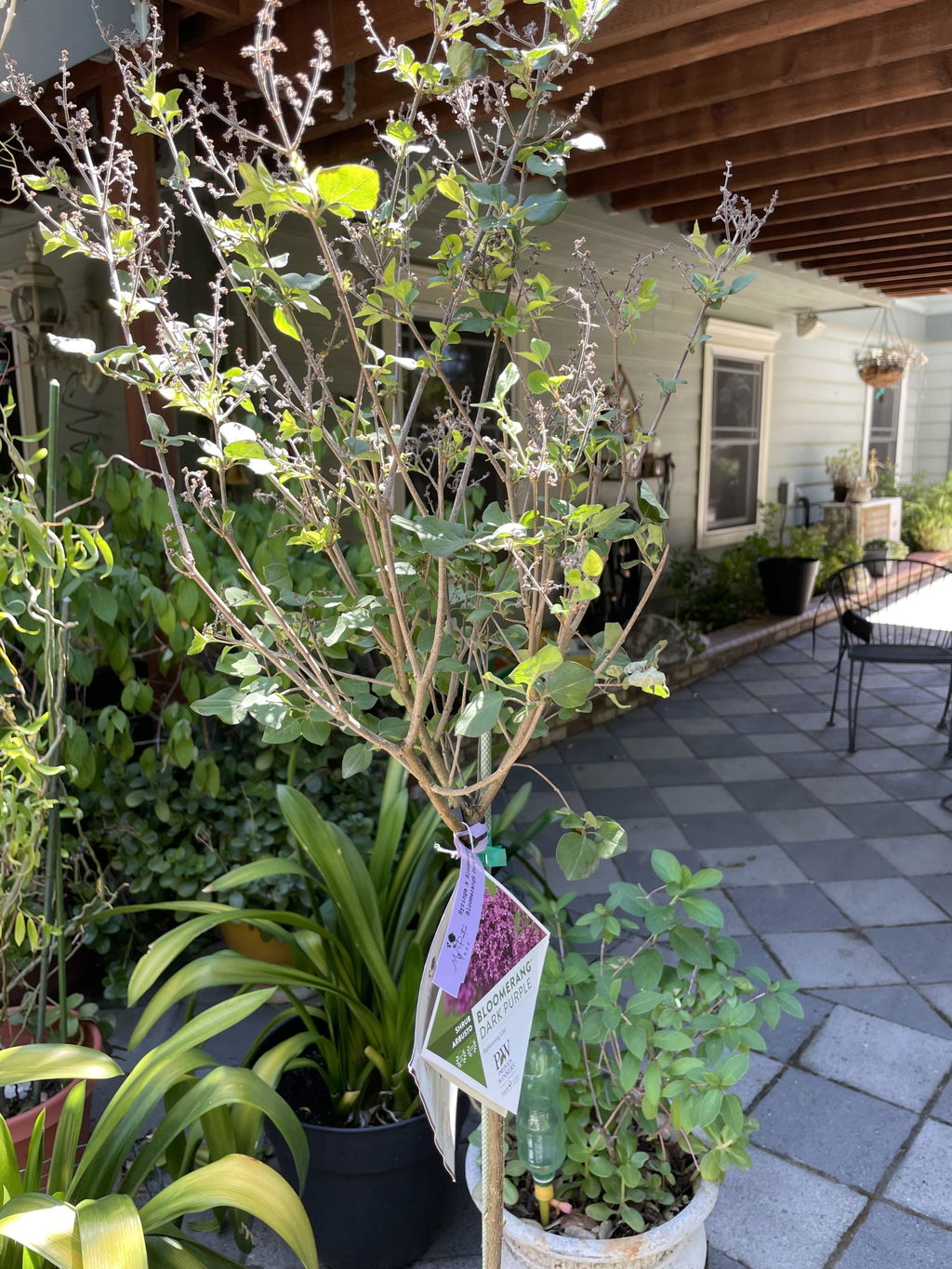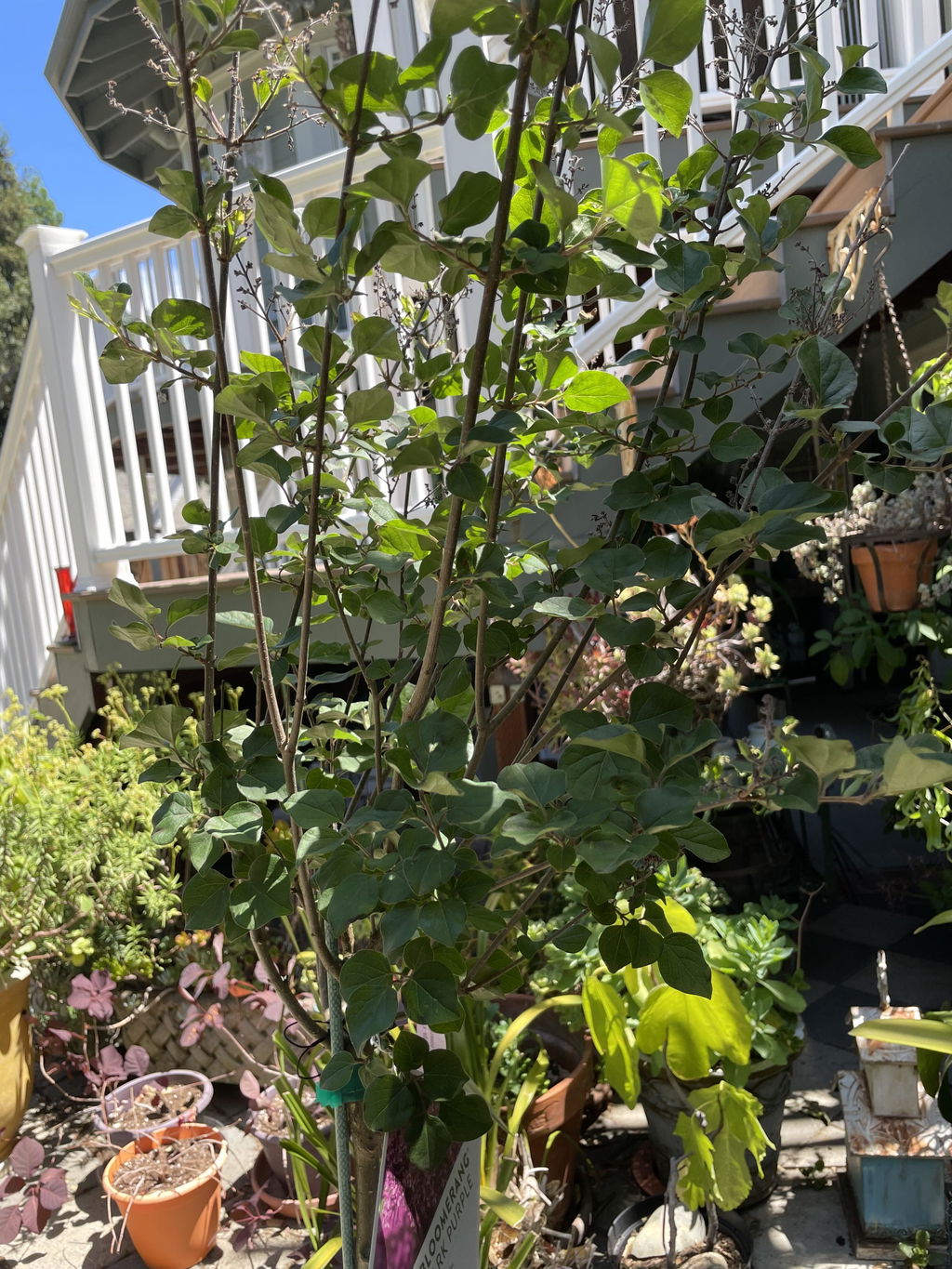



See How Your Tree Arrives
Packed with care. Ready to thrive.
Every My Patio Tree order is carefully packaged to protect your tree during shipping — arriving healthy, upright, and ready to plant.
Watch garden educators from Spoken Garden unbox and plant four of our tree-form shrubs, including tips on container selection, staking, and first watering.
Why You'll Love It
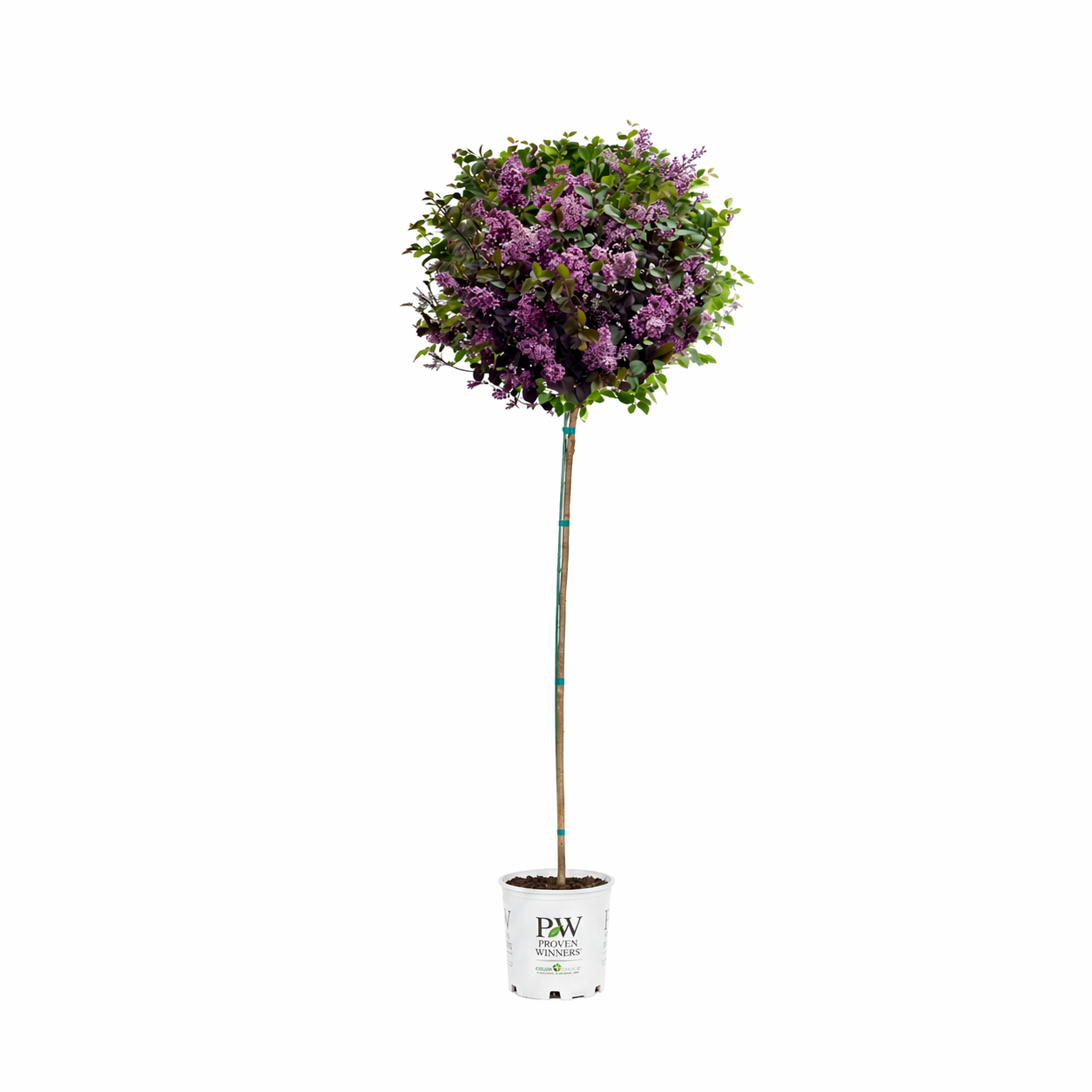
Bloomerang® Dark Purple does something most lilacs cannot: it blooms twice. After a full spring display of deep purple, fragrant flowers, it rests briefly and then reblooms in summer — giving you months of lilac color and fragrance instead of just a few weeks. In tree form, that reblooming habit makes it one of the most versatile and high-value flowering trees available for the patio.
What Makes It Special
- Reblooming habit — flowers in spring AND again in summer
- Deep, rich purple flower color
- Compact enough for patio containers while providing full lilac fragrance
Plant Information
| Botanical Name | Syringa x 'SMSJBP7' |
| Hardiness Zones | Zones 3–7 |
| Light | Full sun for strongest bloom |
| Mature Size | Approximately 6–7 ft tall x 4–5 ft wide in tree form |
| Growth Rate | Moderate |
| Bloom Season | Strong spring bloom, then repeat flowering in summer |
| Flower Color | Deep purple |
| Fragrance | Strongly fragrant |
| Foliage | Green |
Care Instructions
Planting & Watering
Plant in full sun — lilacs need at least 6 hours of direct sun daily for the best bloom. Choose well-drained soil; lilacs do not tolerate wet or poorly drained sites. Dig a hole twice as wide as the root ball and at the same depth. Backfill, water thoroughly, and apply a 2–3 inch layer of mulch, keeping it a few inches away from the trunk.
WateringWater regularly during the first growing season to establish a strong root system. Once established, lilacs are relatively drought tolerant. Water deeply during prolonged dry periods, but avoid keeping the root zone constantly moist.
Pruning & Fertilizing
For Bloomerang®, prune lightly immediately after the spring bloom to shape the canopy. Because it reblooms on new growth, avoid heavy pruning that would remove the new wood needed for summer flowers. Remove any shoots from below the graft.
FertilizingLilacs are light feeders. An annual application of compost or a balanced fertilizer in spring is typically sufficient. Avoid high-nitrogen fertilizers, which promote leafy growth at the expense of flowers.
Winter Protection
Hardy to Zone 3. Lilacs are very cold hardy and require no special winter protection in most climates. Remove any winter-damaged wood in early spring.
Good to Know
Bloomerang® is a reblooming lilac, which means it flowers on both old wood (spring) and new wood (summer). For the best rebloom, avoid heavy pruning after the spring flush. A light shaping is all that is needed.
Growing Zone Map

Bloomerang® Dark Purple is cold hardy to Zone 3 and performs well through Zone 7, making it ideal for northern and mid-Atlantic climates. Its reblooming ability makes it especially valuable in Zones 5–7, where the second flush of fall blooms is most reliable.